Arbor Day demonstration with a bucket truck.

Arbor Day in Edmonton, an annual celebration in May, is one of several City-led programs which enables Edmontonians to learn about creating a healthy, climate resilient city.

Connecting with our natural and human-made network of greenspaces is an important part of being an Edmontonian.

How It All Began

  • The Arbor Day tradition in Edmonton began in 1893 with school children planting trees
  • In the early 1950s, the City of Edmonton started providing seedlings to grade one students
  • The Government of Alberta soon took on this unique initiative and the City created a day of learning for grade one students
     

Other cities and countries celebrate this event on different days in the spring. For more information, please visit the Arbor Day Foundation – Tree Canada and the US National Arbor Day Foundation.

Arbor Day Tree Types

Did You Know?

Each year about 15,000 children receive seedlings in Edmonton
The first Arbor Day was held in Nebraska City in 1872 and an estimated 1 million trees were planted. Read more about who started Arbor Day and why

The most common tree that is presented to Grade 1 students throughout the Province of Alberta is a white spruce (Picea glauca). These trees are native to Alberta and can grow in diverse soil conditions.

Another common tree that students may receive is the lodgepole pine (Pinus contorta). This evergreen tree is the provincial tree of Alberta and is recognized by its tall, straight, narrow crown.

You can tell the difference between the spruce and the pine by looking at the leaves (or needles):

  • White spruce trees have single, short, square needles growing off the branch. Remember single, square needles for spruce trees!
  • Lodgepole pine trees have longer needles, growing in pairs of 2 per bundle that have a slight twist to each needle.

White Spruce - Picea glauca

Full Size: 20 – 45 meters
Form: Narrow pyramid
Foliage: Single, square, dark green to blue-green needles
Lifespan: Up to 200 years

White spruce grows best in well-drained, moist soils. It can withstand flooding during the growing season, but it does not like to stand in water or be very dry. It has moderate shade tolerance.

Plant this tree species at least 8 metres from any building or permanent structure, but not under power lines.

A drawing depicting a white spruce tree.

Lodgepole Pine - Pinus contorta

Full Size: Up to 30 meters
Form: Tall, slender, straight trunk
Foliage: Needles are long and twisted, light green to yellowish, growing in bundles of 2
Lifespan: Up to 150 years

Lodgepole pine is best grown on well-drained, loamy soils. As one of the most drought-tolerant of our native conifers, it is found on a wide range of soils. It is tolerant of partial shade, but does best in full sun.

Plant this tree species at least 8 metres from any building or permanent structure, but not under power lines.

lodgepole pine

Tree Planting Instructions on Private Property

Arbor Day trees are a symbol of the future just as our children are. If we nurture them and give them space to grow, we will see what a great contribution they make to our community.

How to Plant Your Tree

  1. Select a good location for your tree that will allow plenty of space for it to grow tall as well as wide (at least 6 metres). Choose a location away from overhead powerlines and underground utilities. Spruce and pine trees like open areas and can also do well in partially shaded areas
  2. Contact Utility Safety Partners before digging
  3. Dig a hole 2.5 cm (1”) wider than the root ball and just as deep (about 3” for your seedling)
    A diagram for how to properly plant a tree, as described in step 3
  4. Identify the root flare (where the trunk expands at the base of the tree) and check for proper depth. Once the hole is just deep enough for the root ball to sit even with the surrounding soil, you can plant the tree
  5. Place the seedling into the hole, making sure it’s straight, and begin to fill the hole with soil
  6. Firmly, but gently, pack the soil around the root ball to ensure there are no air pockets and the plant has proper support
  7. Water your tree and watch it grow

Tree Seedling Placement

Ensure the hole the tree seedling is placed in is not too deep or too shallow. There must be no air pockets; otherwise, root growth and tree alignment can be affected. The soil must also be fairly compacted (not too loose), and be of good quality. Refer to the Arbor Day Seedling Planting Guide for more information.

A diagram depicting the appearance of trees planted in various circumstances, such as being planted too deep or too shallow.

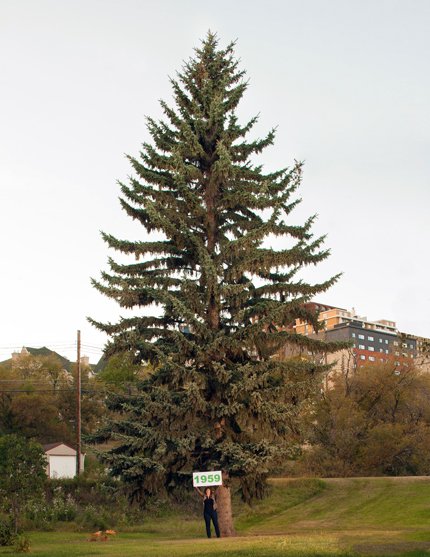
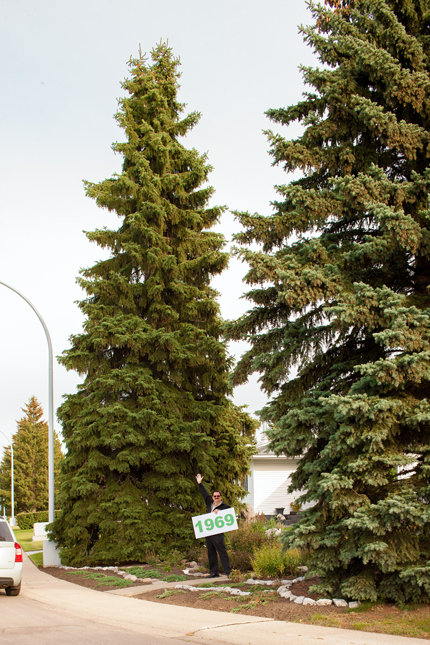
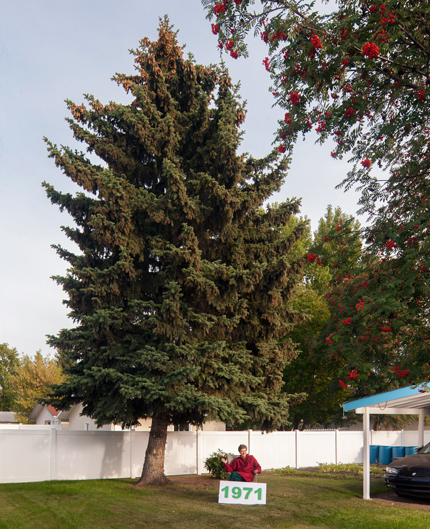
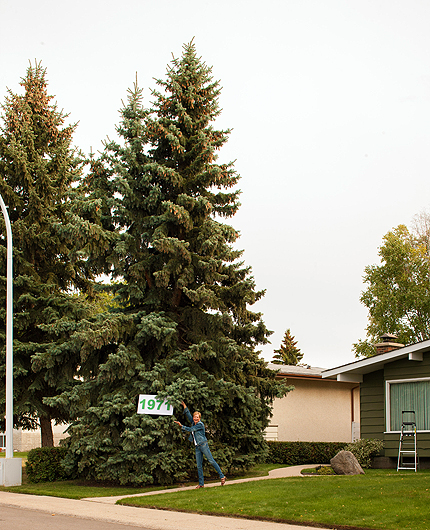
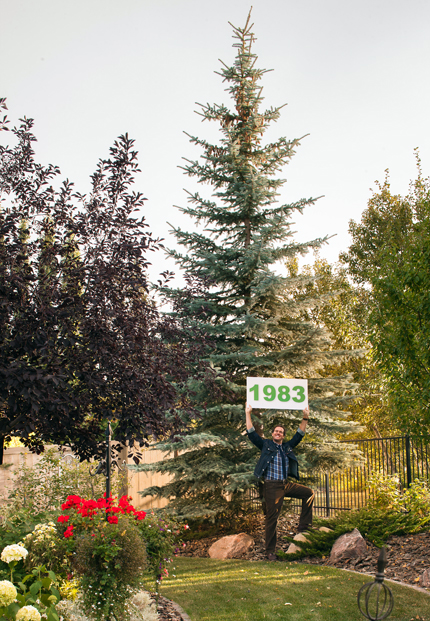
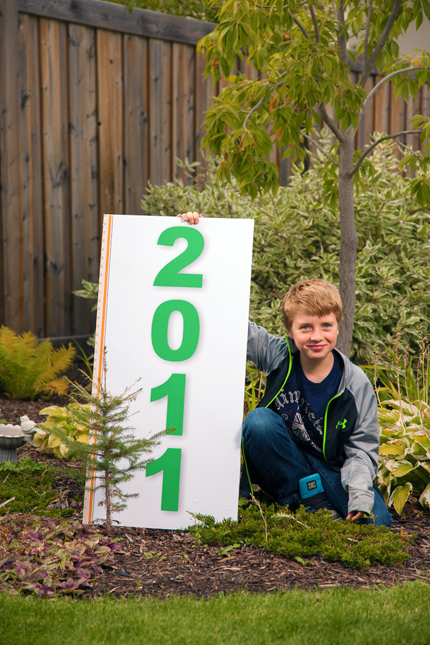
Arbor Day Trees Through the Decades

Children grow up with their trees and some people even move their trees when they buy a new house!

Contact Us

311 Contact Centre

Phone  311 | TTY: 711 | outside Edmonton: 780-442-5311

Link  Contact 311 Online