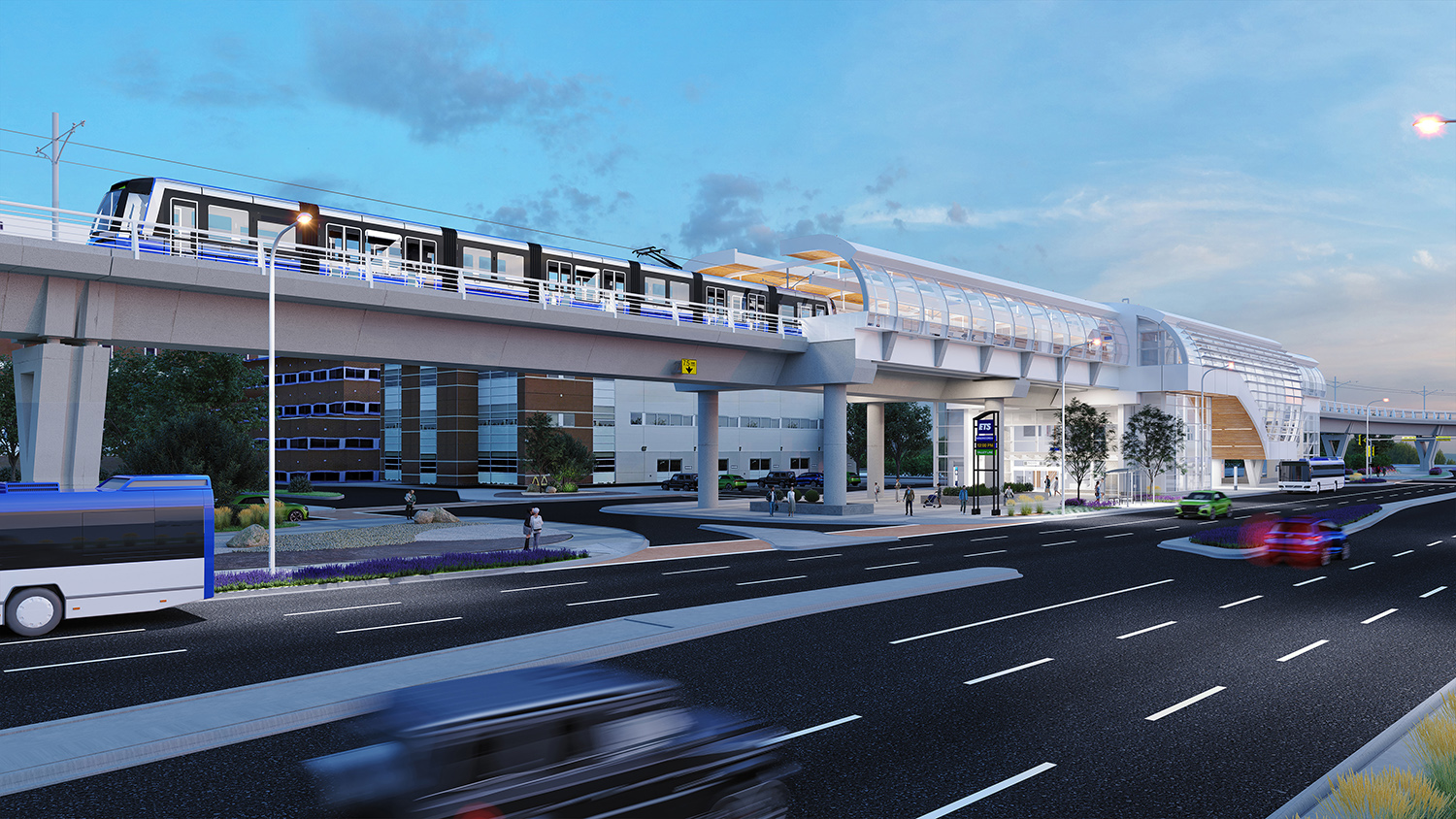
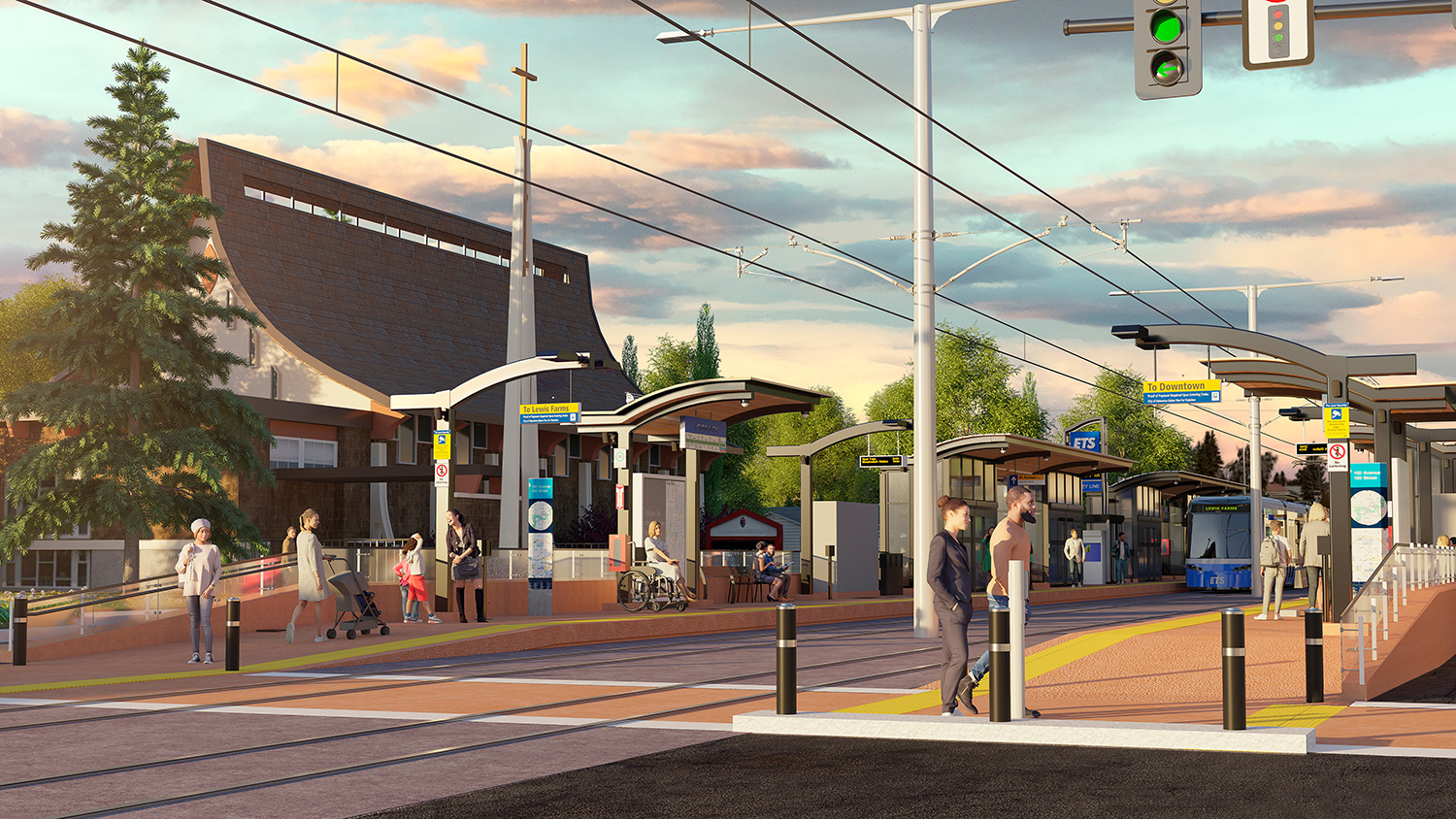
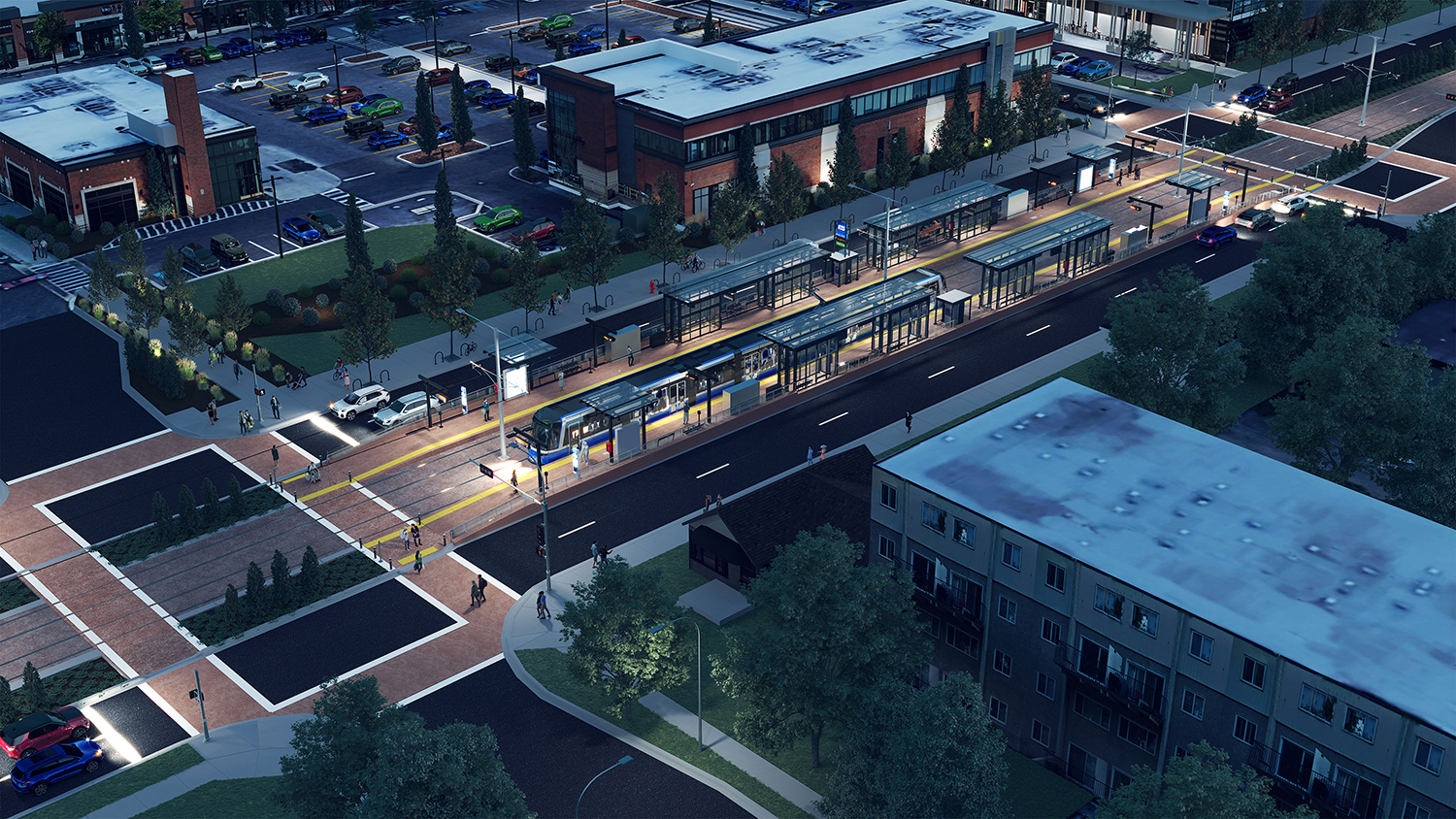
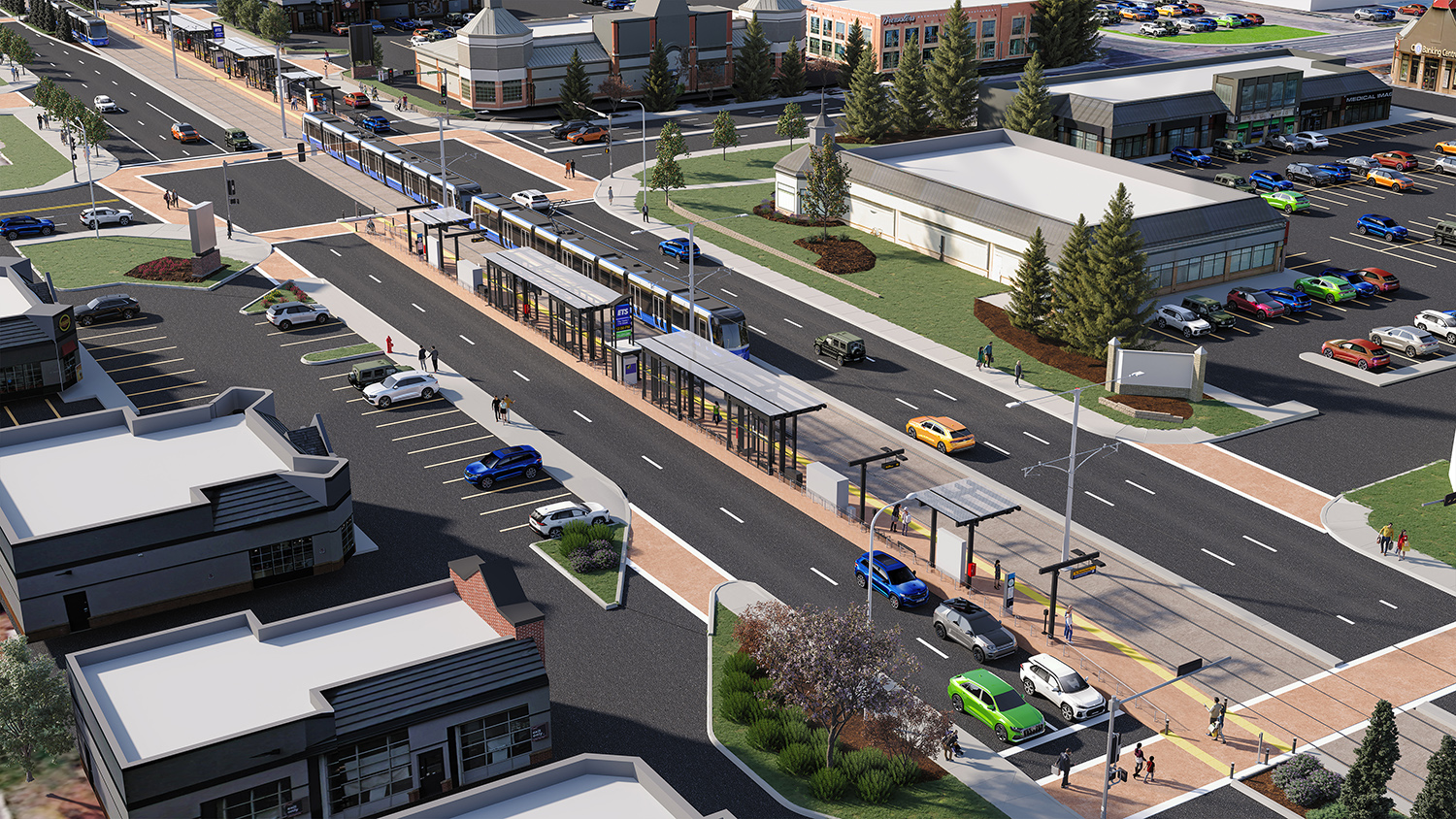
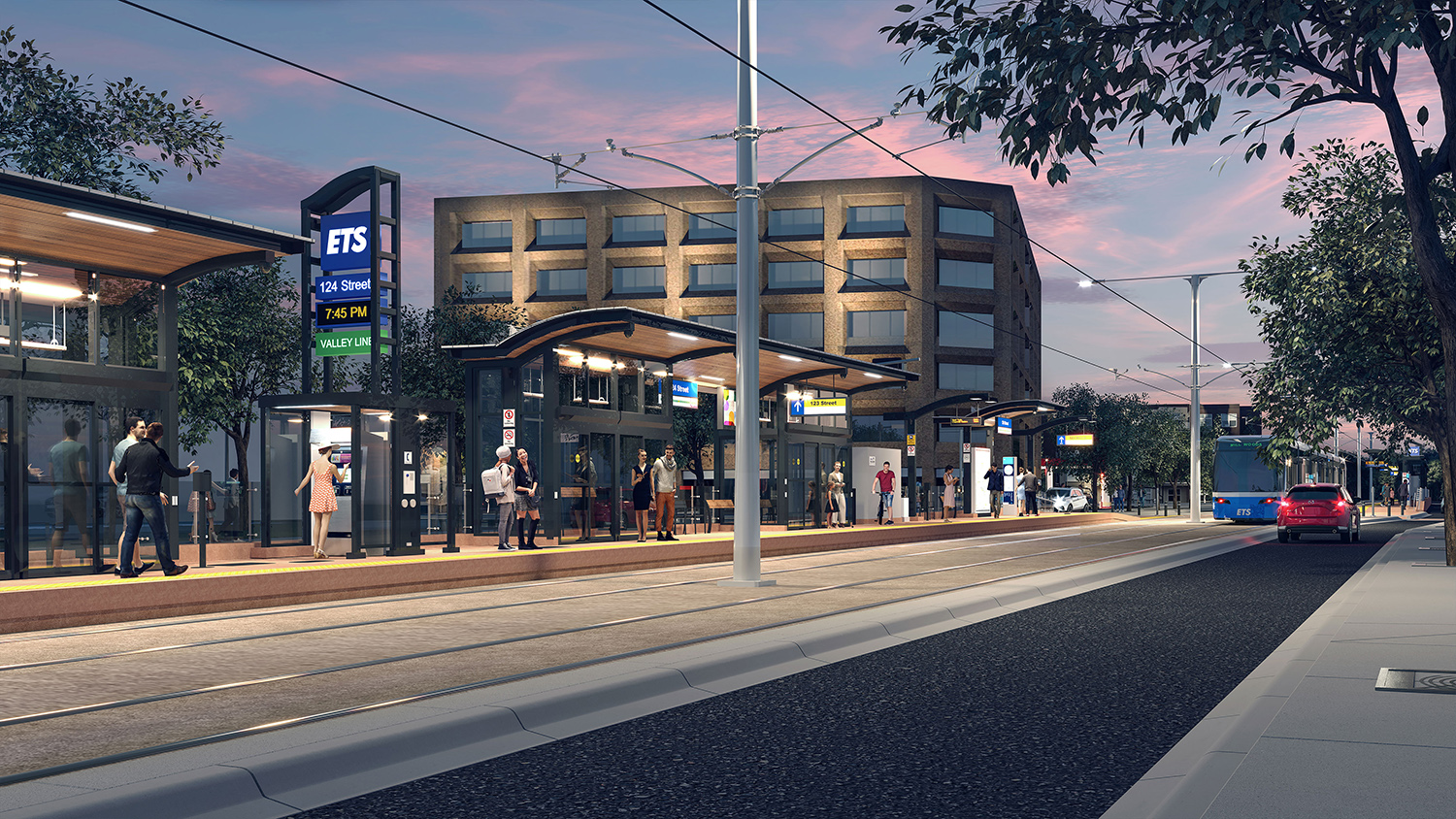
Valley Line West is a 14 km LRT extension from downtown to Lewis Farms. Marigold Infrastructure Partners is the contractor building the extension. Construction is anticipated to be complete in 2028, followed by testing before the line can open.
The first Valley Line West Light Rail Vehicle (LRV) has arrived at the Gerry Wright Operations and Maintenance Facility
Accelerated Roadwork Underway
Accelerated roadwork in key areas will occur throughout 2025 and will reduce the overall duration of traffic restrictions by more than half. This plan will allow Marigold to complete the majority of roadwork in 2025 and get many of the roads into their final configuration.
A three-phased approach from April to November 2025 will impact several major intersections and corridors, including:
Phase 1
104 Avenue (105 to 121 Street) - reduced to one lane eastbound and westbound - started the week of April 14 (until November)
When work is complete at each of the intersections, traffic lanes will begin to open. However, Marigold will continue to work in the area, and minor traffic restrictions will remain in place until the end of the construction season, allowing Marigold to complete as much work as possible. In addition to the accelerated roadwork, Marigold will also continue to work at many other locations and facilities along the alignment.
Watch a timelapse video showing accelerated roadwork at Stony Plain Road at 124 Street.
Ongoing communication with impacted parties and businesses will continue in order to find collaborative solutions to maintain access to businesses. A public communications plan has been developed to proactively inform Edmontonians about the traffic restrictions and alternative routes. Read the full Council report.
It’s the second stage of the Valley Line, an urban-style 27-km line that will operate between Mill Woods in southeast Edmonton and Lewis Farms in west Edmonton.
Valley Line West includes:
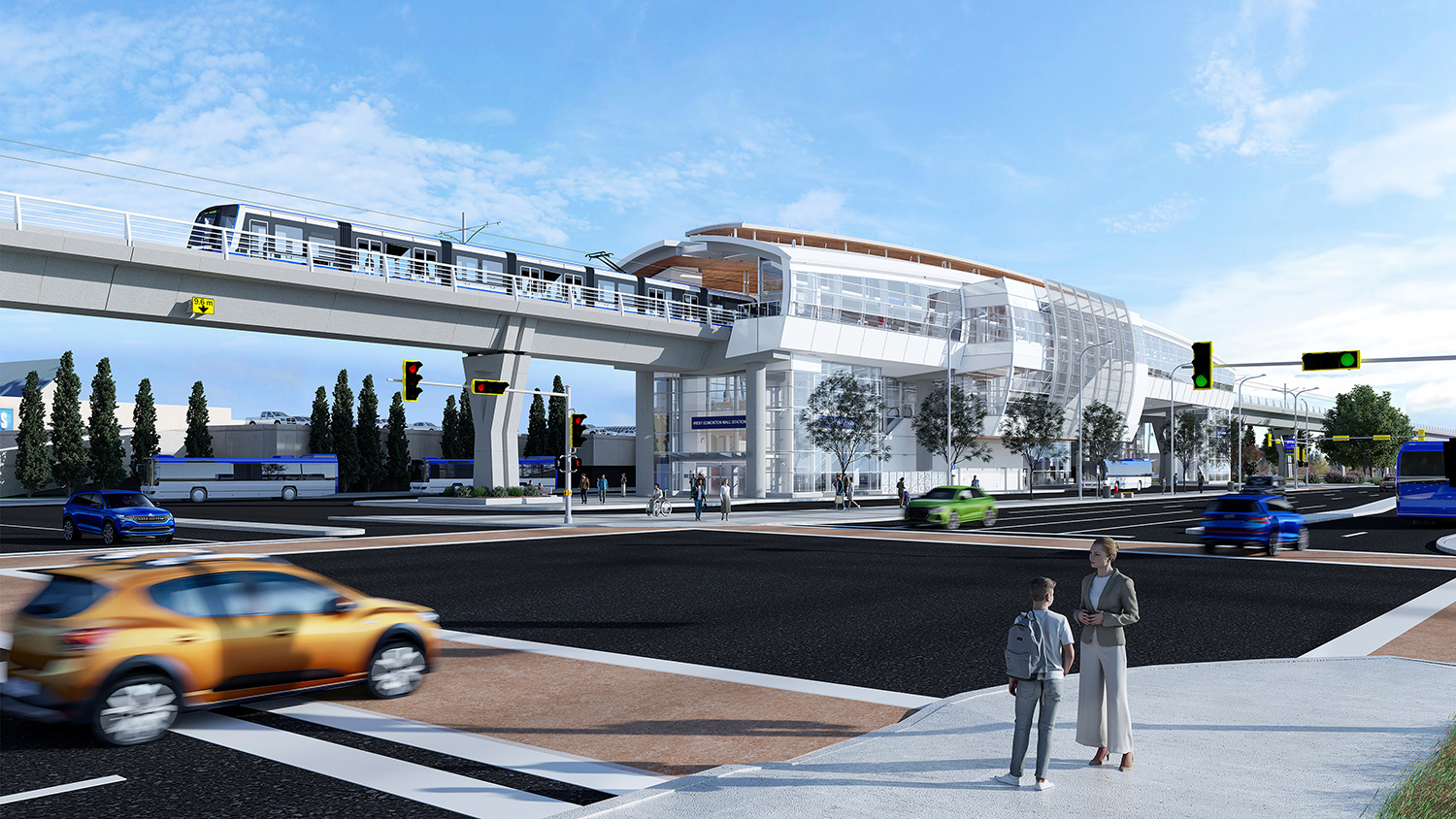
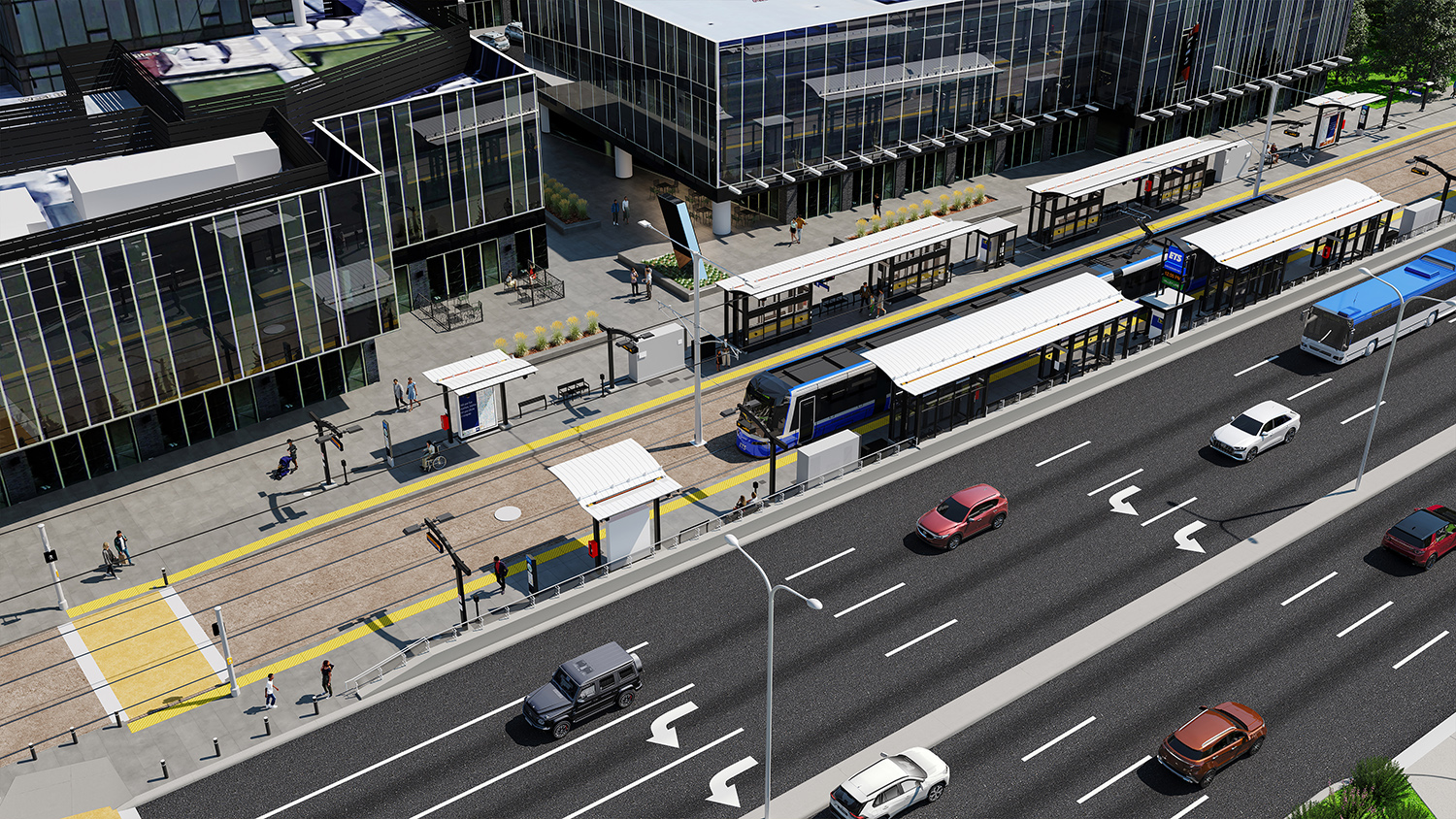
14 street-level stops and two elevated stations (West Edmonton Mall and Misericordia Hospital)
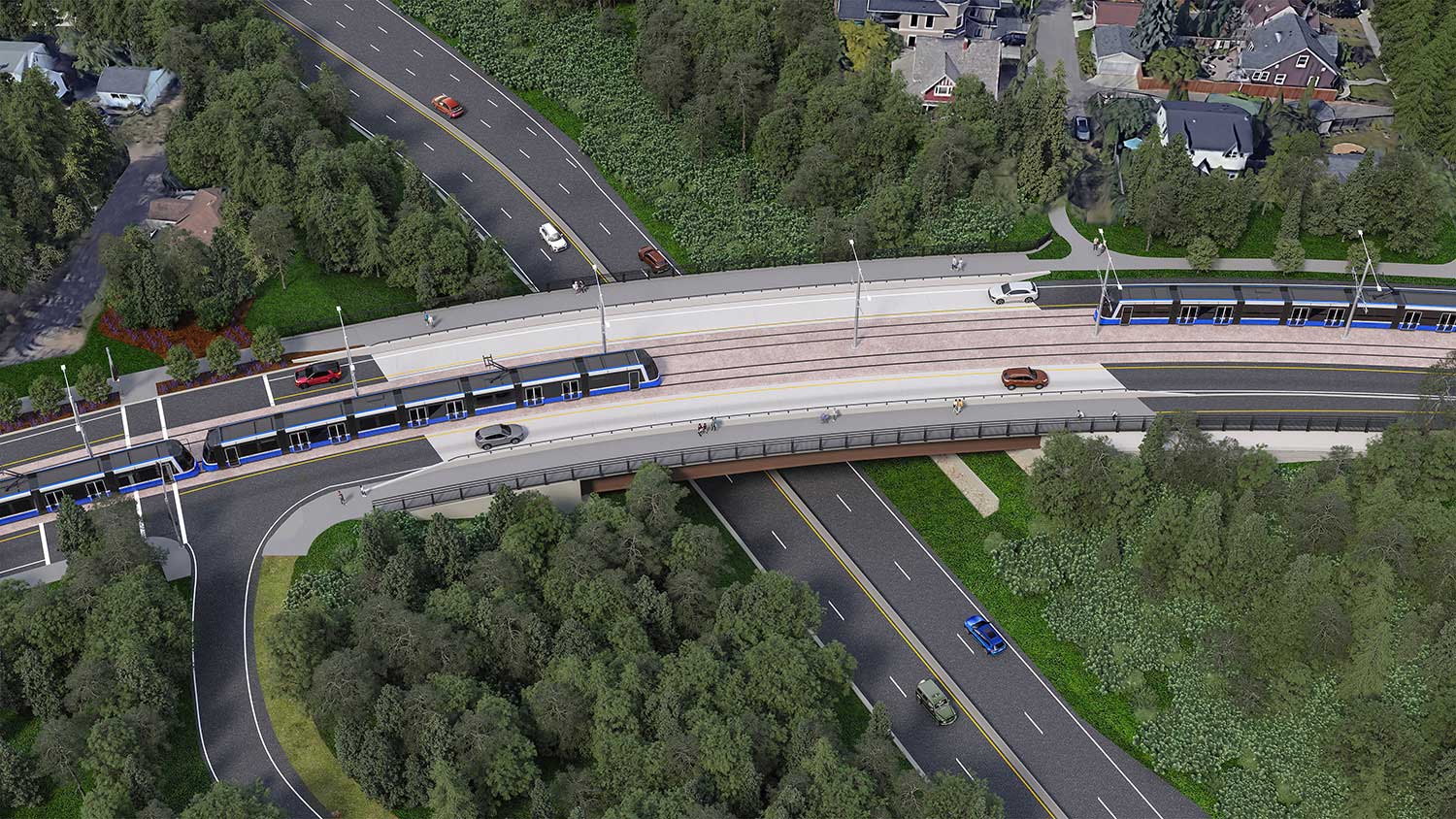
Two new bridges (crossing Groat Road and Anthony Henday Drive)
Two new facilities (Gerry Wright Operations and Maintenance Facility near Whitemud Drive and 75 Street, and Lewis Farms Storage Facility in west Edmonton)
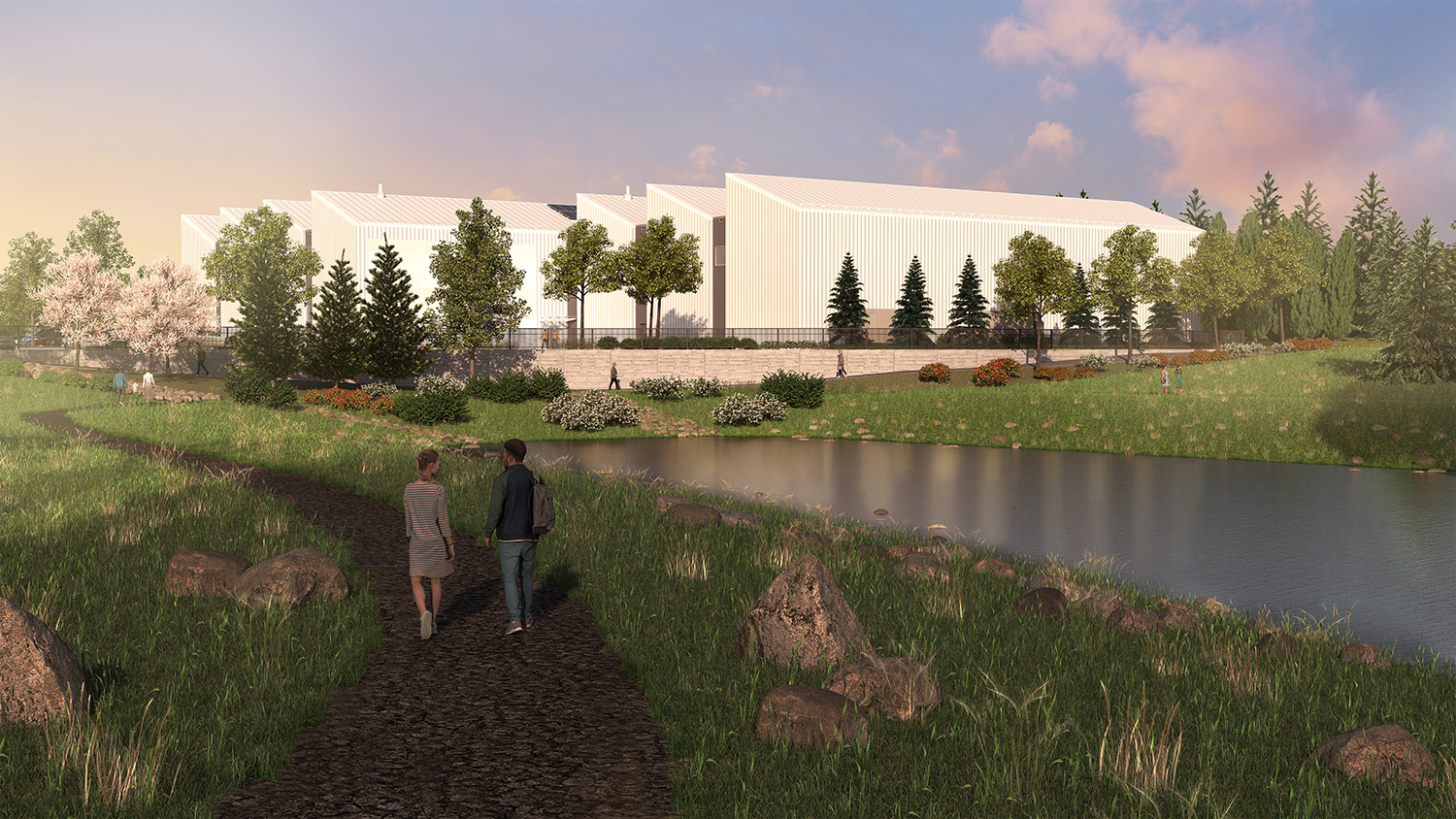
Work on the train storage facility at Lewis Farms continued throughout 2024, including track work and exterior cladding on the north face of the building.
Expansion of the Gerry Wright Operations and Maintenance Facility on 75 Street is ongoing. In late 2024, construction included roofing, window glazing, interior concrete slab and track tie-in work. In 2025, major construction will continue inside and outside the facility to prepare for the arrival of light rail vehicles in mid to late-summer.
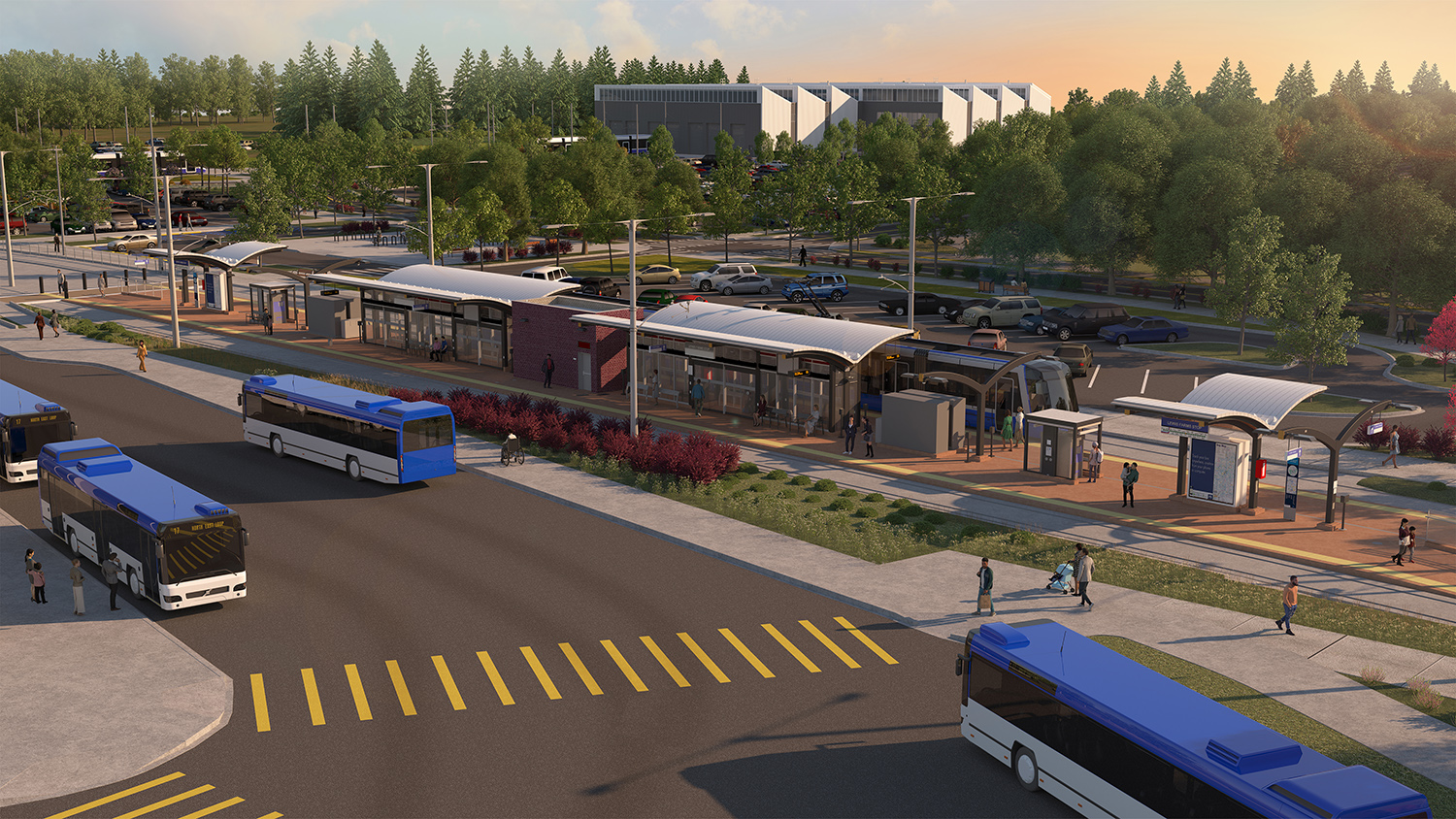
In August 2021, the City temporarily relocated West Edmonton Mall Transit Centre on 87 Avenue. The transit centre moved to an interim location on 90 Avenue north of the mall, beside West Edmonton Mall Inn, where it will remain for the duration of construction.
This location ensures transit riders continue to receive transit service to and from the surrounding communities and West Edmonton Mall. All bus routes accessing the previous transit centre have moved to the temporary transit centre.
As of January 2025, the majority of tree removals along the Valley Line West alignment have been completed. Remaining tree removals will be completed as required to accommodate construction activities.
The City and MIP understand that mature trees are very important to residents. The City works with subject matter experts such as landscape architects and certified arborists, who make recommendations regarding tree retention, removal, replacement and protection.
While the majority of the trees that were removed were not suitable for relocation, MIP will plant at least 1,800 new trees and shrubs along the Valley Line West, as part of a full landscaping plan once construction is complete.
Stay Informed During Construction
For questions related to the Valley Line West project, please contact:
As part of an ongoing commitment to transparency and accountability, the City releases periodic reports to provide an overview of progress and performance on the Valley Line Project. These reports include a summary of work completed by MIP and the City.
View our 360-degree virtual reality video of the Alex Decoteau stop on the Valley Line West route. See first-hand how the Valley Line LRT will transform communities into more walkable, street-oriented places for people to live, work and play.
The City is responsible for delivering the project. The project is funded by all 3 levels of government, with the Government of Canada and the Government of Alberta each providing approximately 40% of the funding, and the City of Edmonton funding the remaining 20%.
Marigold Infrastructure Partners was selected to design, build and partially finance the Valley Line West. Marigold is responsible for communicating the day-to-day construction impacts to residents and business owners along the LRT alignment. The City selected Hyundai Rotem Company as the successful supplier that will provide 46 light-rail vehicles (LRVs) for this project. Other contractors will be selected as needed, to supply operations and maintenance services, and other supporting construction activities.
With direction from the City and 2 years of public consultation, the principle of Sustainable Urban Integration (SUI) was established.
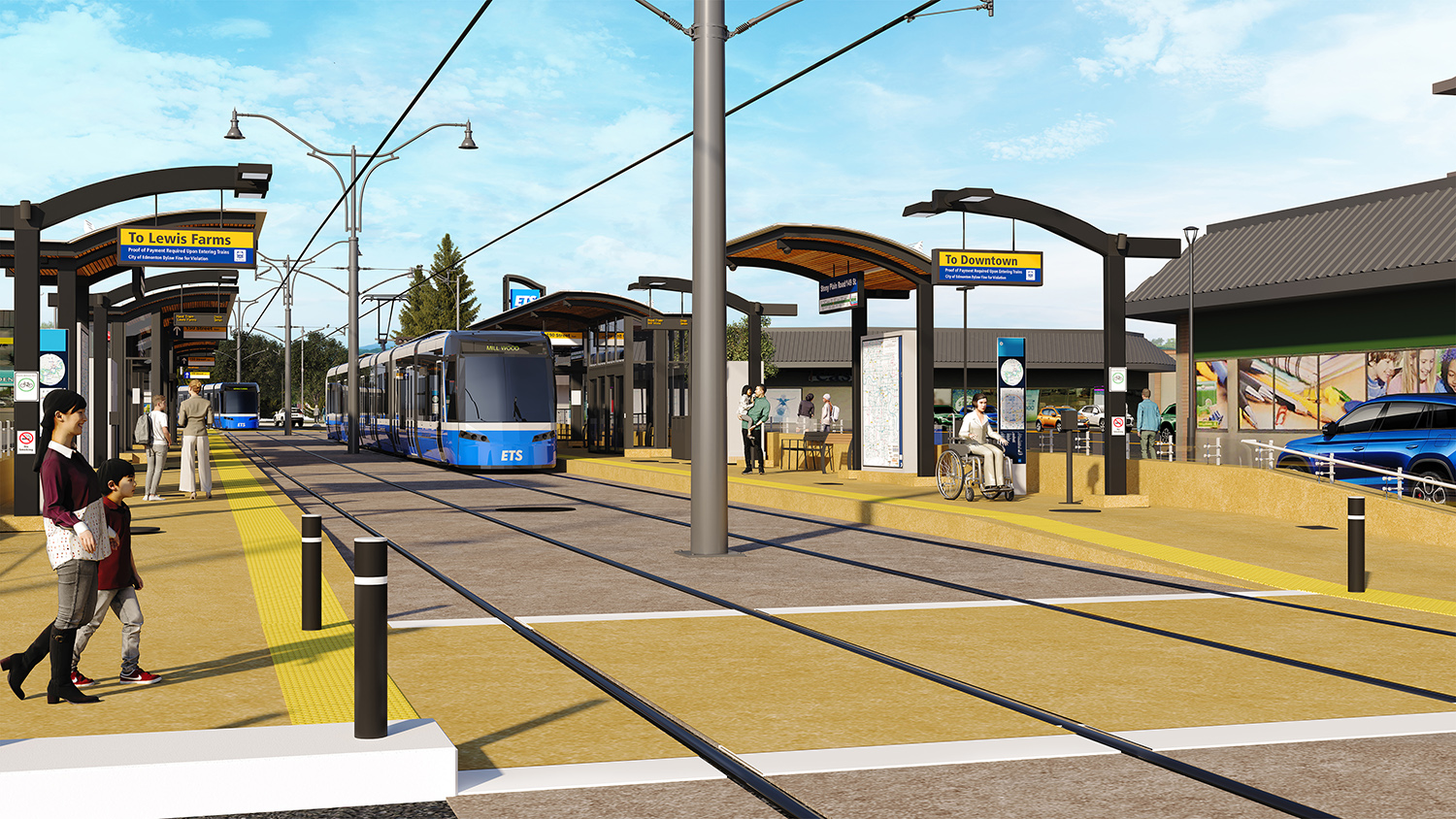
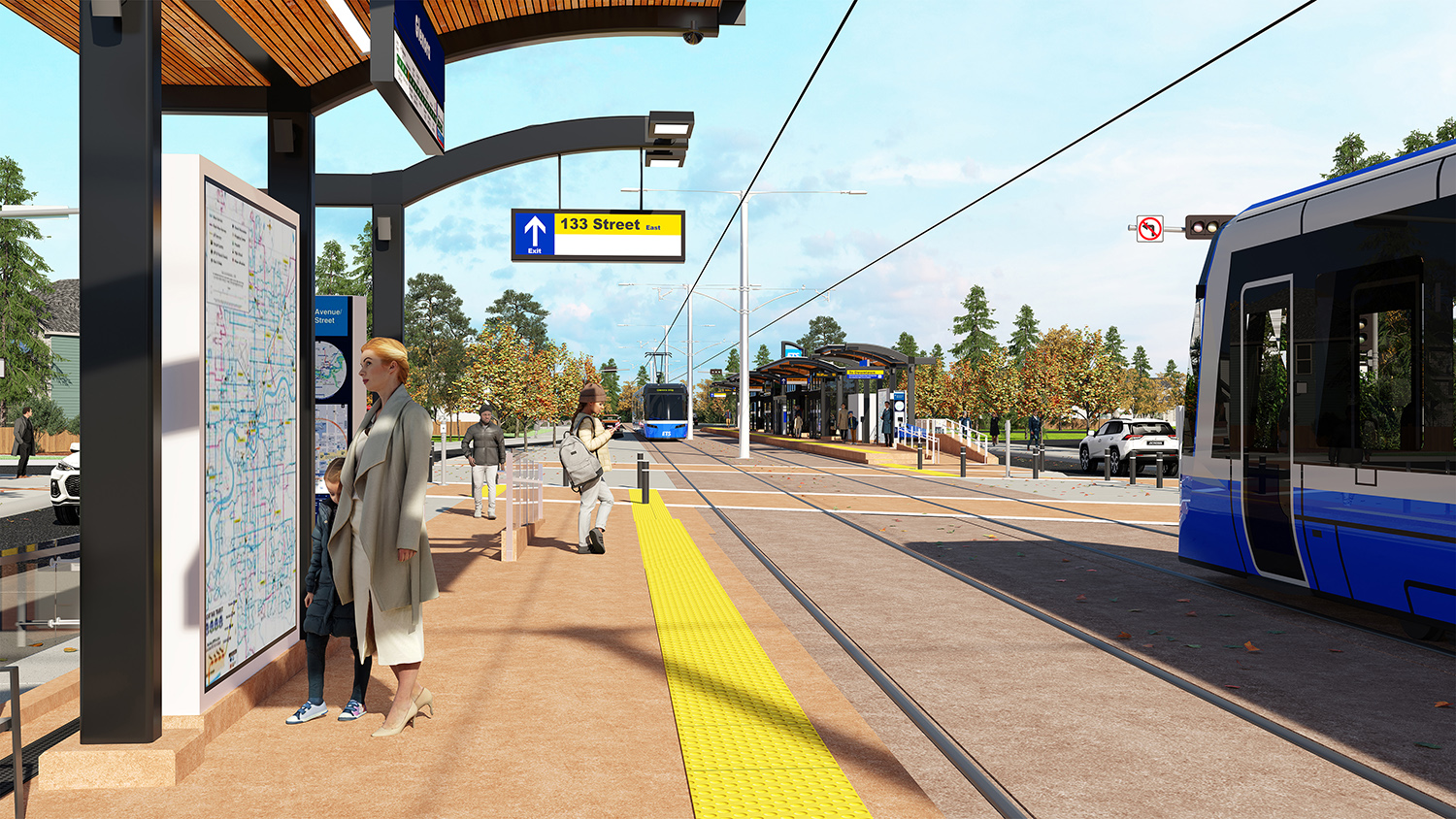
SUI looks beyond the building of tracks and trains to create neighbourhoods that are safe, attractive and connected. This involves designing livable, pedestrian-friendly environments and adding enhancements that reflect the feel and character of each of the communities along the LRT corridor.
Some examples of SUI enhancements include:
Building shared-use pathways, sidewalks and trails
Adding bike lanes that connect to the City’s existing bike lane network
Designing pedestrian-friendly zones around stops and stations
Using enhanced landscaping and streetscaping along the length of the corridor to create a more natural environment
Incorporating organic materials such as stone and wood wherever possible
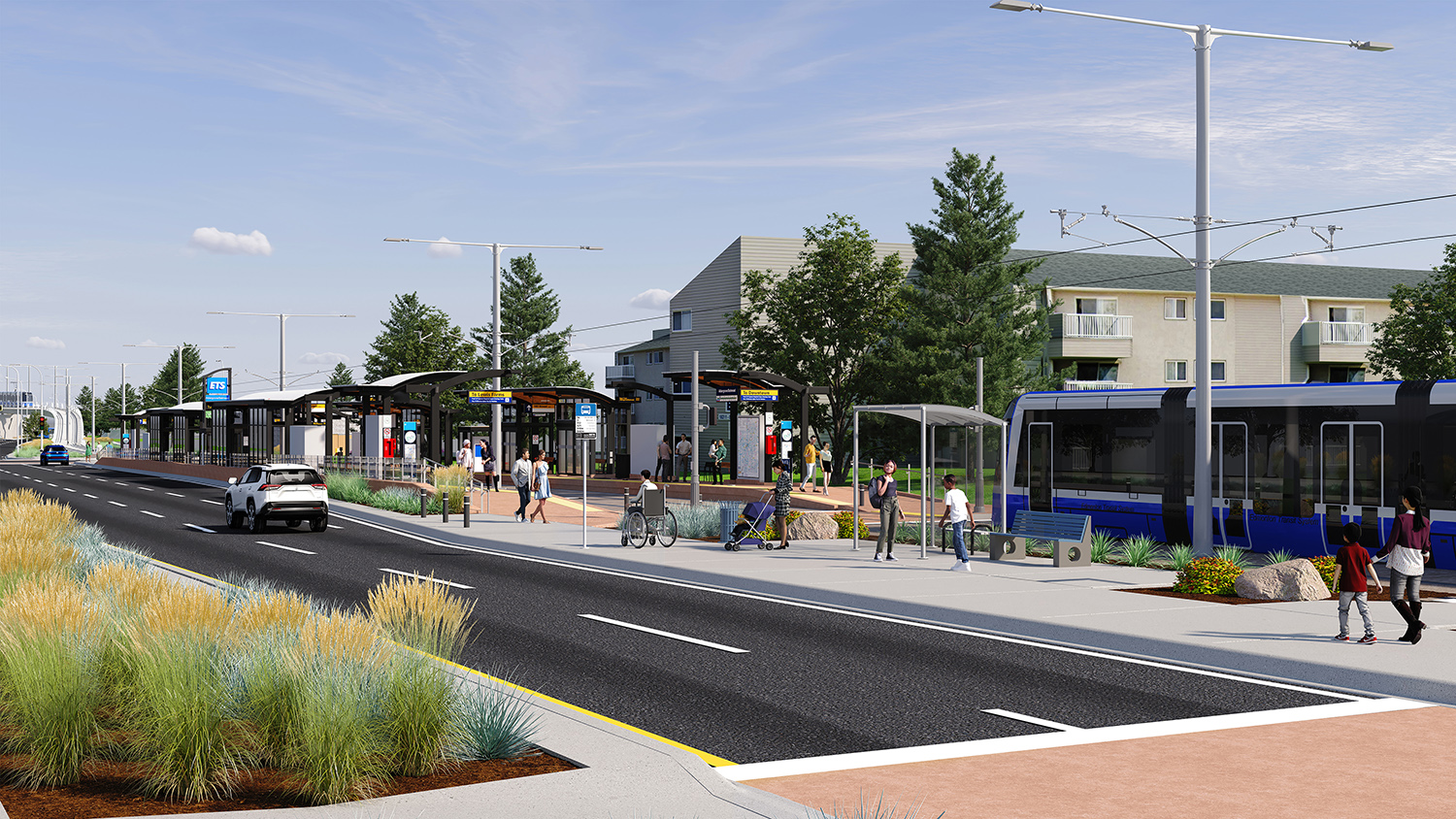
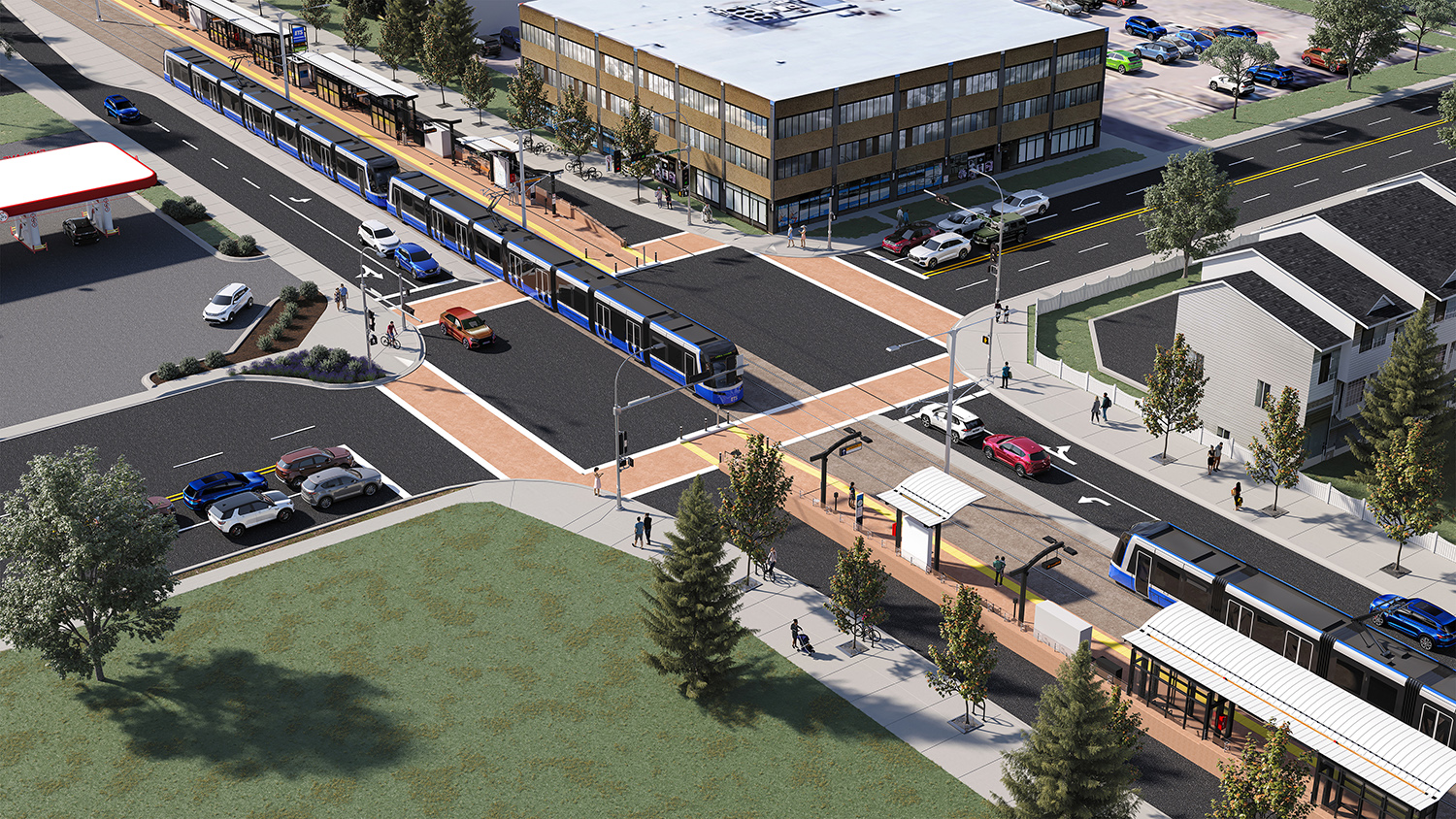
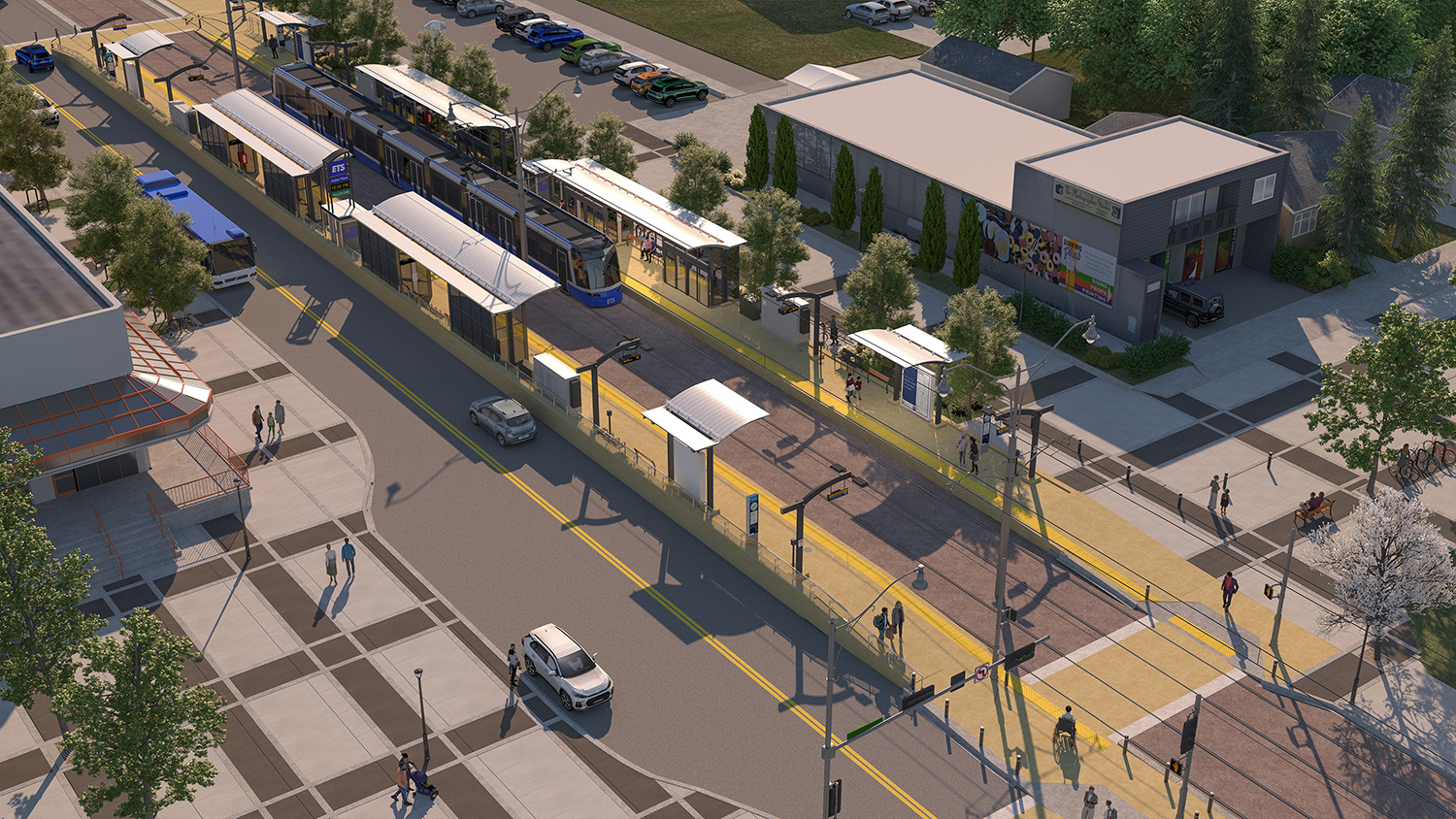
The Valley Line LRT is designed to meet the overall goals of LRT expansion while fully integrating with the communities it serves. The low-floor, urban style LRT allows stops to be small, basically a raised curb and sidewalk with a shelter. Stops can be spaced closer together, making LRT accessible to more people. It costs less than elevated or subway systems.
The Valley Line LRT will run alongside traffic in designated lanes and follow the posted speed limits. The LRT will cross through an intersection during a green light and stop at a red light, just like the other vehicles on the road. The LRT may get green light priority at some intersections, but because no crossing arms will be lowered, cross-traffic won’t have to wait additional time before and after the LRT passes. As a result, increases in wait times are usually minor.
Another benefit of keeping the LRT at street level is that no overhead structures or tunnels are required. Going above or below street level creates visual and physical barriers in the community that reduce comfort and accessibility for pedestrians and cyclists moving through or within the area.
A fully elevated or underground LRT would be inconsistent with the City’s vision, and it would be very costly. This higher cost would result in a much longer time to expand the system and realize the benefits.